Archive for the ‘Medical School’ Category

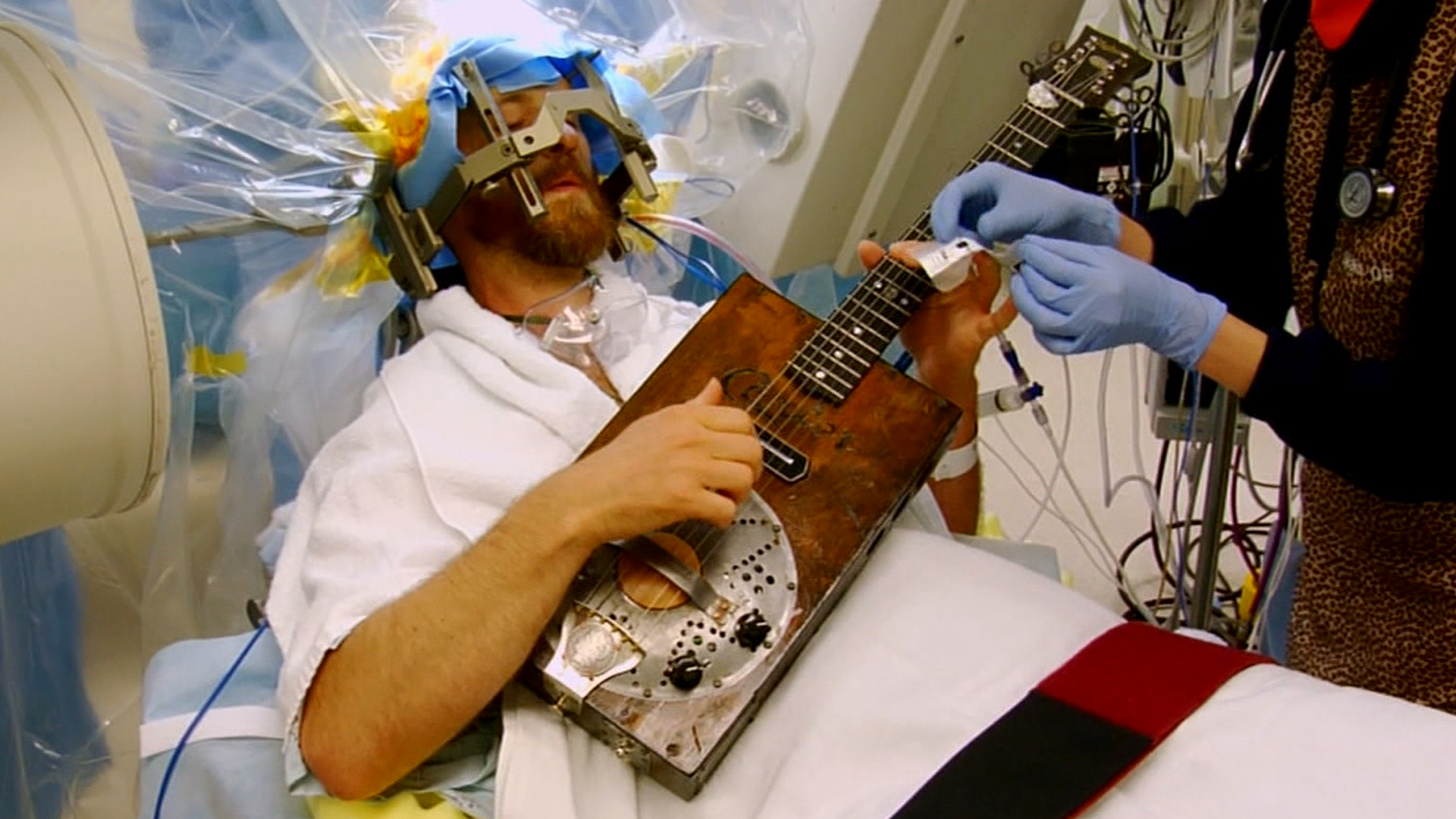
Guitar Brain Surgery

Photo Credit: Today Show

Many years ago, when I was engaged in hand-to-hand combat with the ferocious winters of Montreal, I was introduced (virtually) to a speaker who shared these thought-provoking words “What makes you angry? It is a clue to something you were purposed to address.” The words have echoed in my mind since then, especially when I see something upsetting. And that happened this week.

I was watching a run of the mill news story featuring German Chancellor, Angela Merkel, holding a town hall meeting in which a young immigrant girl, living in Germany, expressed her desire to continue her studies in Germany. The problem? She was a refugee from Lebanon, now facing deportation. As she spoke of how painful it was to watch her friends go on to study when she could not, she cried. Merkel’s response:

When you stand in front of me and you are a very nice person, but you know . . . there are thousands and thousands [of people] and if we say you can all come and you can all come from Africa… We can’t manage that.”

Immigration is a loaded topic and there are reasonable arguments both for being lenient and selective in policy. What got to me is that the simple desire of this girl to study where she lived was being held hostage to a policy and to the limitations of her home country. It reminded me of my experience at a Kenyan hospital earlier this year when a mother presented her child with a spinal birth defect at 9 months instead of the recommended 48 hours which caused lower limb paralysis and incontinence. Why not earlier? Cost. The mother could not afford it. It is frustrating when people do not have access to basic education and health. But what is more upsetting is when we settle for sensible answers and say things like “There are not enough resources to go around.” or “We can’t take everybody.” Where is the creativity? Where is the resolve that says this is unacceptable and sensible answers are not enough?

It was not sensible to suggest fighting malaria with a fence that shoots out lasers to kill mosquitoes . . . a “Phototonic Fence” is almost ready for market.

It was not sensible to have a patient play guitar during brain surgery, but that’s how a neurosurgeon recently conducted an operation to ensure the patient’s brain function was not being compromised.

It was not sensible to suggest that the nation with the highest percentage of its population engaged in mobile banking would emerge from sub-saharan Africa . . . today, that nation is Kenya.

It was not sensible to suggest that internet service can be provided to a rural community without electricity. The creative thinkers at Mawingu Networks are doing just that using solar energy and “television white space,” unused television frequencies.

No one is saying these problems are easy, but we won’t solve them by conventional thinking. This could be reduced to another “thinking outside the box” message but this imperative goes deeper. I think we all harbor real doubts about whether some problems can ever be solved, but if we see something isn’t right, it should drive us to do something about it regardless.  The creative knowledge is there and our access to each others’ thoughts is unprecedented.

You’d be amazed what you can find.

Consider a silly experiment that I carried out this week. First, let me say that I am always astounded when I look up something on Google at how many people have asked the question before, even when it’s quite obscure. So I decided to make up a highly ridiculous search request, just to see if the question had been asked.

I typed in the question “Do onions make good pillows?” I did not find a hit with that exact question, but someone did ask whether he should sleep with an onion in his armpit. Why??? Apparently, in some regions of South Asia, it’s a trick to cause a fever for kids to get out of school. I have no idea if this works and have no (immediate) plans to test it. But if it is true, how was that discovered?? Minds are churning every day and we have access to these minds.

It bothers me when we settle and use words like “reasonable”, “realistic” and yes, “sensible”. This is not arguing for rebellion for rebellion’s sake, or self-indulgent attention seeking. And, of course, there is a place for planning and counting the cost. But, there are real heart wrenching issues we face today that are costing lives and hope that can only be confronted successfully if we’ll take the risk. Spectacular success begins with the willingness to fail, spectacularly.

Let’s stop being sensible.
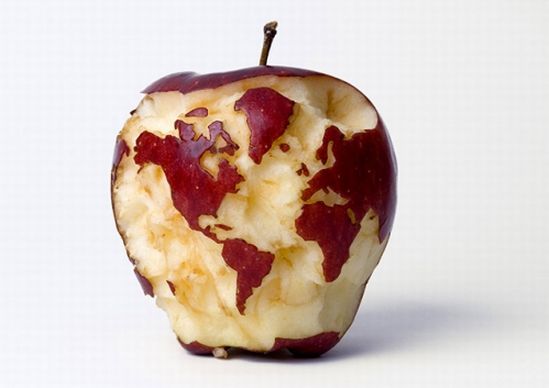
Apple World

Photo Credit: W Yuting, University of Oregon

If I were to ask you right now to list the most important qualities you want in a doctor, you would probably start with “Competent” and “Empathetic.” The first word out of your mouth would probably not be “Creative.” And yet, there is a growing trend in the medical literature and medical school curricula toward incorporation of the arts and humanities in physician training. Why?

Dr. Danielle Ofri, in her excellent article in the New York Times points out that creativity in medicine would not be unheard of: “Medicine is a field with a strong history of creativity, but its daily practice feels less and less so.” Creativity is tied to innovation and so should always be welcome if a field wishes to progress. But is getting medical students to read poetry and looking at paintings just a bunch of fluff? Not according to two well respected physicians at the University of Georgetown who offer this concrete example of how humanities sensibilities enhance medical clinical skills:

“Selected viewings of art with trained art historians,” in which medical students “learn context, practice description, and note emotion.” This could help to understand and identify “the different cultural and historical lenses through which images are filtered”—an important way to understand the assumptions they bring to their interpretation of a set of symptoms.”,

But what about at the day to day level, real patient, real person. What difference does it make when a doctor gets creative? Dr Ofri gives a  great example from Dr. Oliver Sacks in which a patient had Tourette’s syndrome with debilitating tics that were negatively affecting his home and professional life. He was prescribed Haldol, which eliminated the tics but also flattened his ability to improvise as a jazz drummer, one of his favorite activities. The non-creative doctor response would have been “You have to take the good with the bad”, as Ofri notes. But the creative doctor proposes “Take Haldol during the week so you can do your job, and hold at the weekends so you can play your drums like you used to.” The solution is not only creative but empathetic. And this is where I think the link is crucial. Because of how much I care about the entire health of my patient, my empathy fuels my creativity.

If there is one clear lesson I learned from my years in Theatre it is that people have many layers. Often, these layers contradict each other. I want to eat healthily, but have you tasted that burger or chocolate mousse? I want to give but I also want to take. I want to create but sometimes, I also want to destroy. Contradictions are part of who we are. That is why I think that Ofri proposes that computers can never effectively treat people:

“If all patients and their diseases presented in exactly the manner of the textbooks, then the algorithms would be sufficient . . . but the human condition is far messier — in health and even more so in illness.”

Anton Chekhov, a doctor, became one of Russia’s most celebrated playwrights precisely because of his fascination with human frailty or weakness, first physical and then psychological and emotional. He wrote characters who were compelling not because they were eloquent, morally outstanding or successful but because they were profoundly human, aspiring to be something greater even if they did not always succeed. The creative doctor is one who looks at this person first and the disease second.

That’s not easy. Using standard treatments and keeping on schedule in a pressurised healthcare environment is far more efficient. Stopping the world to “create” for your patient demands so much more from the doctor, often within a system that does not encourage it. And yet, if we are to stay true to the ideals of medicine, we must swim against the tide and be creative for our patients. Creativity is an act of empathy.

Do you want your doctor to be creative? I hope so.

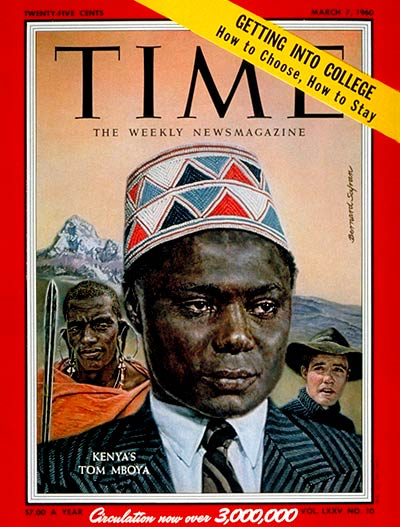
Tom MboyaHow is he holding it together? I asked this question often while Tom Mboya was being grilled by a panel of veteran journalists on Meet the Press. I stumbled across an audio recording of this 56 year-old interview and I was riveted, not just by the content but by the poise of Mr. Mboya, a mere 28 years old at the time. Tom Mboya is widely regarded as one of Kenya’s greatest losses, an articulate and intelligent politician, gunned down by an assassin’s bullet at the age of 39. He was one of the fearless architects of Kenya’s independence, but what was there to learn from a 56 year old audio recording of this interview in the US? As it turns out, a lot.

https://www.youtube.com/watch?v=djx6Oop81m4&feature=youtu.be

One by one, each journalist asked Tom Mboya pointed questions essentially asking one question “Was Kenya really ready to govern itself.” Some of the questions were at best paternalistic and at worst condescending. Yet, Mr. Mboya remained calm and responded with thoughtful logic, well-crafted arguments and measured passion. It was such a refreshing change from the loud but often empty arguments that present themselves on many modern talk-shows where you wonder if anyone is really listening.

Mboya’s poise in this interview is a further example of something that has been on my mind lately, “bold humility.” I think of it as the sweet spot between confidence and deference. We have all witnessed (or perhaps even perpetrated) the ambitious and confident but ultimately obnoxious personality, with no awareness of personal limitations. On the other hand, we can be humble and deferential to the point that we neglect truth and justice for the sake of not “rocking the boat” or “keeping the peace.” And that is what struck me as so impressive in Mboya’s interview: Even though certain questions called into question the very intelligence of his people, he respectfully, yet boldly and without apology stated his goal, a free Kenya, now. I would submit (to use Mboya’s phrasing) that professional excellence arises from the mastery of the tension between humility and confidence or “bold humility”

In acting for example, the actor must be bold, walking onstage in front on thousands of people with thousands of lines in his head, memorized patterns of movement all over the stage and possibly lyrics, music and dance steps as well. All this is expected to be performed with precision, emotional availability and, where appropriate, flair and pomp. This can be done timidly, but to truly communicate the character, the actor has to risk everything, including public failure to truly shine. That takes boldness. And yet, the most accomplished actors know that the moment the performance becomes about them, the moment they lose the humility that puts the character first, the performance loses its truth and its power and rings false. And this line is so thin!

In medicine, patients expect a certain degree of confidence from their doctors. And yet, there are also those moments that require humility. Consider when the neurosurgeon has courageously taken on a difficult tumor surgery but pauses during the surgery and concludes it’s time to stop the operation. She is too close to a nerve, a vessel or language center. She has the humility to stop the operation there, but also had the boldness which allowed the patient a chance and perhaps bought more time to be around family. Again a thin line exists. How close is too close?

How does “bold humility” play into your choices?

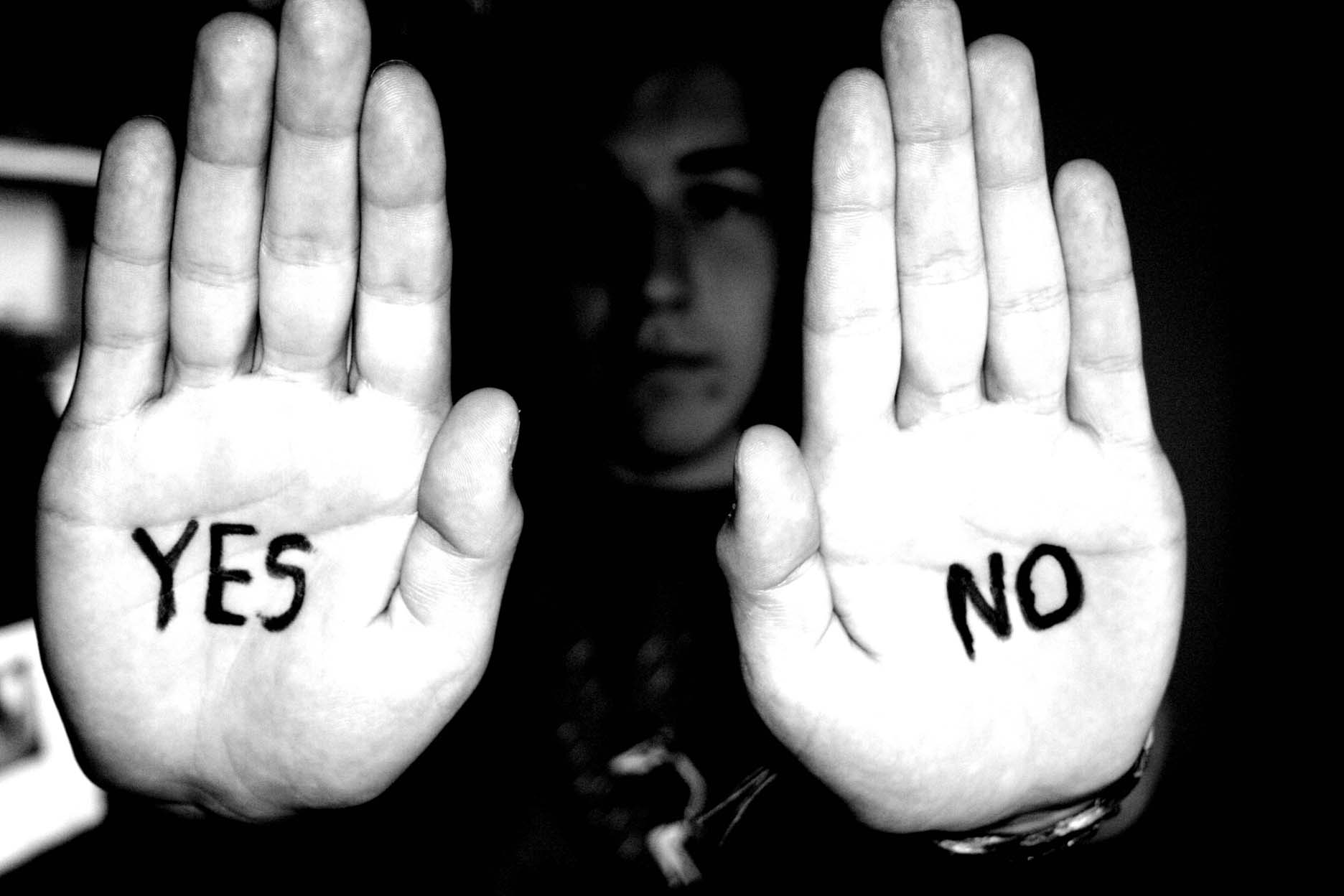
yes_no_by_thisisgalaxy
What makes you say “Yes”? I have begun my journey into the book Hidden in Plain Sight by Jan Chipchase. So far, Chipchase is interested in how we respond to new things and what leads us to adopt or reject them. He argues that adoption is not a one step process but rather a 5 step sequence: Awareness-getting to know about the existence of new things  Interest-wanting to find out more Evaluation-imagining one’s life with this new thing Testing- giving it a trial run and finally Adoption- a commitment to use. He further argues that we can be early adopters who are typically, but not always, innovators or the young and highly educated; medium stage adopters who are slightly older, perhaps less educated and late adopters or laggards and flat out rejectors.
Why do you adopt some things and reject others? The biggest factor seems to be what everyone else is doing. And why does this matter? For me, it matters because I want be part of the effort to effect widespread change in healthcare delivery and knowing what makes people behave a particular way seems central to that vision. Take a simple example: I was skeptical about joining Twitter for a long time. I wondered what was really worth saying in 140 characters. It seemed superficial and an excuse to spout fluff about bacon for breakfast (although, it should be noted that bacon is indeed delicious). Then, I found out people and organizations I respect were on it, and some of the dynamic ways it was being used and I began to reconsider my opinion. I have since joined Twitter and now integrate it in both personal and professional areas of interest. But did I simply have a limited understanding of Twitter or was my perception altered by those around me, even though the platform stayed the same? What was the “reality” of the usefulness of Twitter?
twitter-evolve
On the subject of reality, can we take a quick detour for a moment? I heard something thought provoking this week from a cognitive scientist who argued that we often do not perceive reality as it really is (optical illusions, misread social cues etc) but that this may not actually be a bad thing in every instance. This scientist ran some evolutionary experiments on his computer and found out that accurate perception of reality did not necessarily translate to increased survival. Is there an evolutionary benefit to believing certain illusions? Are we witnessing the triumph of tact?
Truth matters of course and I don’t think anyone would argue for living in a fantasy world defined by illusion, except perhaps actors, but that’s the job;) Is it in our benefit (or others’ benefit) to know everything accurately and share everything accurately at all times? For the die-hard “tell it like it is” types, this question may seem obvious, but consider the Alzheimer’s patient who keeps forgetting her husband has died. Every time we confirm that he has, she feels fresh grief. The next time she asks “Is my husband still at the store?” Is “Yes” more compassionate than breaking the news of his death once again? What happens when reality and compassion clash?
Or consider this headline from BBC Health this week:
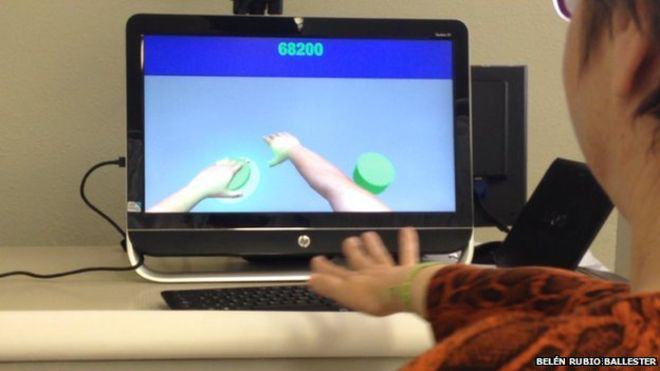
Virtual reality could help stroke patients recover by “tricking” them into thinking their affected limb is more accurate than it really is, researchers find.” In this case, an illusion is central to the therapeutic process . . .
Stroke Arm

The virtual reality arm appears to move faster and more accurately than the real arm. Courtesy of BBC Health

Perhaps the guiding principle is that we should be more interested in meeting people where they are, than where they should be. This does not mean abandoning timeless ideals of truth and justice, but it does ask for a certain nuance and compassion in how we apply these lasting principles.

Doorknob

Door knobs can be annoying. They’re not all the same. It’s not always clear whether you should push or pull and nothing makes you look like an idiot faster than struggling with a door. There are people who spend their days determined to spare you this anguish and they are called designers. In the past week, I have been reintroduced to the possibilities of design to solve all kind of problems including the ones that seem most intractable. I am especially interested in how design can improve how we deliver health.

So how did this start?

A couple of years ago, I took part in the HULT Prize, a global student competition in which teams from around the world are challenged to come up with a social entrepreneurship solution to a pressing world problem. In our year, it was the growing problem on non-communicable diseases in urban slums. We reached the finals with an idea that combined microinsurance, theatre, and mobile technology to dynamically manage diabetes and hypertension. To come up with this solution, we used something called design thinking. Design usually conjures up the idea of decoration and aesthetics, but in reality the best design goes beyond making things pretty to actually improving how things work, something the heathcare system badly needs. Some of the principles of design thinking include observation, defining the problem, which is often not easy, then free-form brainstorming, prototyping and then testing the idea and starting the process again. The process is not linear or analytical but rather cognizant of the fact that complex problems cannot be solved with only one line of thinking but rather multiple iterations.

Design-thinking-stanfor´d

Design Thinking

And so it was refreshing to come across the work of Dr. Joyce Lee at the University of Michigan who is a doctor with a strong interest in design and how it can transform healthcare delivery. Her work started with a simple observation, that her son’s school had an allergy action plan that was badly designed. She worked creatively with her son (who has severe food allergies) to create a simple, yet compelling YouTube video on how to respond to ingested food allergens that was so effective, it was adapted by the school and spread over the Internet.

One of the most powerful methods of design thinking is the process of observation, really taking the time to notice how things and people work around you. We miss so much. Interestingly, I used to give similar advice to my actors, to go out and really watch people (in a non-creepy way, preferably). It’s the tiny nuances that can make the biggest difference in presenting characters on stage. Take the simple act of convincing an audience that you are drinking a hot cup of coffee. The obvious part would be to gingerly pick up the cup and sip carefully showing that the coffee is indeed hot.  But if you watch someone carefully with a hot drink, there is one other detail, the tiniest of squints as the steam from the cup arrives at the eyes. The audience may not consciously register this detail, but the illusion is complete and effective. That kind of detail comes from observation. The actor needs it; so does the designer; so does the doctor.

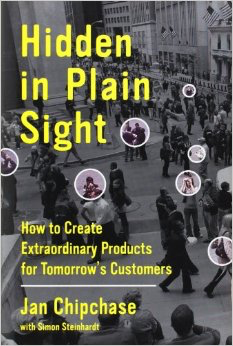
My first goal in learning about health and design is to “see” better. How do things really work in everyday life? When challenged to think about what I really see, Bertolt Brecht came to mind. The famous German Theatre practitioner built his Theatre on the premise that we should always question the status quo, but that we could only do that if we had a way to reexamine what we have gotten used to, a process he called “making the familiar strange.” His motivations were primarily political but his principle is compelling. How much around us is really set in stone? What do we presume to be fixed and unchangeable? Do we ask “why” enough? So, yes, I’d like to see more. To help prompt this process, I will be reading the book Hidden in Plain Sight: How to Create Extraordinary Products for Tomorrow’s Customers by Jan Chipchase. Feel free to join me . . . let’s see what we’ve been missing.

Hidden In Plain Sight

Moody Awori

Hon. Moody Awori, left (former Vice President of Kenya) with President Uhuru Kenyatta

At 5am a few days ago, I was awoken with a text with awful “news”: “Just heard Uncle Moody passed away yesterday.” I was in shock; not Uncle Moody, not the uncle who stepped into my dad’s shoes when he passed away when I was 11, not the uncle who spoke at his funeral and captured the essence of who my dad was in his compassionately eloquent style, not the Uncle who rose to the Vice Presidency of Kenya and became everyone’s “Uncle Moody.” As I grappled with the news, an inconsistency emerged. Although, the news of his death was being widely circulated in Kenyan social media, no one could get a confirmation of his death from the immediate family. And that’s when the real headline broke . . . it was a hoax. Someone hacked into the Twitter account of a local paper and posted the news of Uncle Moody’s “death.” This person even went so far as to hack the accounts of prominent politicians and post condolence messages on their behalf. Soon, the family confirmed he was in fact alive and well and I experienced extraordinary relief that carried me through the whole day  . . .

The whole bizarre episode got me thinking. Why was my relief so great? Of course, Uncle Moody is a close uncle who stepped into my dad’ shoes alongside my uncle Hanny (short for Hannington!) when my father passed away. But this is also someone I barely see in person these days because he lives in Kenya and I live in the US and my Kenya trips can be as long as 3 years apart. How then could the news of his “death” and the subsequent relief that it was not true have such a pronounced effect?  I have always assumed that “closeness” (proximity) is strongly related to “closeness” (intimacy) but that is only part of the story. I think we underestimate the scope of our influence in others’ lives. Right now, there is someone’s universe that is being grounded by the fact that you’re still here, even if this person is far away and you haven’t said a word in years. I think this is more than touchy feely wishful thinking. Do we really have an accurate grasp on what our life means to others?

This paradigm shift in what closeness means also made me consider those moments on the wards when we are trying to track down family for certain patients and it has proved elusive. It is tempting to focus on immediate family in the area when, in reality, the most significant relationship the patient has may be dressed very differently than our typical next of kin paradigms capture. According to a recent article in  JAMA, (The Journal of the American Medical Association), almost 1 in 10 patients specify someone other than immediate family members as their next of kin. Is it really worth it to hunt down that aunty in Alaska? Could be the one thing the patient truly wanted.

And what about the hoax? Will we ever know who thought it could somehow be funny or provocative to fake the news of Uncle Moody’s death? I don’t know. In an age where double-edged social media can create instant panic, truth may be elusive, but must still be sought out.

Social media helped create the lie, but social media also helped to correct it.

 Work-Life-Balance-Sign-post-by-Stuart-Miles

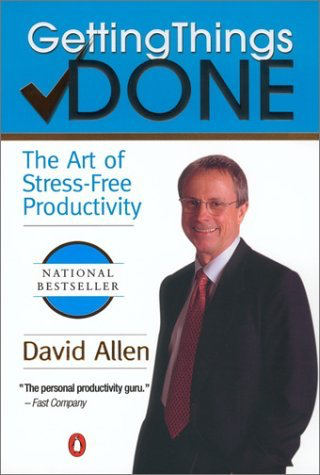
How long will it take before you decide how much of this to read? Even to get to this point, you made a calculation: I’ll take 5 seconds to click on this link. But if you’re anything like me, you may wonder whether you are doing what you should be doing at any given point in time. And how do we know that? I recently completed an excellent book called Getting Things Done By David Allen and its ideas are striking.

Now, I’ll admit that the title did not grab my attention at first. Getting Things Done seemed to lack a little imagination. It’s like a mechanic writing a book called Car Repair or a college instructor titling his book Teaching. But I came to appreciate how this book gets to the point. Most of us have more to do than we seem to have time for. How do we handle that? What is interesting about this book is that the focus is not on productivity as an end itself but rather on why productivity matters. The central premise of the book is that until we can get some kind of control over the mundane thoughts that run through our minds, we are not truly free to explore the higher levels of purpose and thinking that we would enjoy and, in fact, we are not even free to be totally present with those we are around. The book offers a framework based on the concept of an “external mind” that is taking the time to “capture” everything running through our minds that we know we need to do. These items are organized into a series of meaningful lists that work very differently from simply “to do lists.” We then clarify those items and ultimately engage them in systematic way. One advantage I have seen right away is feeling a little more comfortable with what I’m NOT doing. There is a plan for those items, in a system that I review regularly, and so I do not need to keep thinking about things that I am not acting on right now. Getting_Things_Done So why would I want to talk about one of the thousands of time management systems out there? Well, this happens to be one recommended to me by my wonderful sister and its philosophy, creating free mental space for what matters, resonates with me. But beyond that, busyness is such a consuming part of modern culture, especially in the US and I often notice how much of a trap this can become. I look at people walking in the street, sitting down to a meal with their families in a restaurant, meeting a friend for coffee and I wonder how present they are in those moments. And if they are not, I can understand that battle. But should we really settle for this pseudoengagement? In acting, being in the moment is the holy grail, not focusing on how a line has just gone or anticipating an upcoming tricky monologue, but rather just being there. That is the center of the powerful performance.The neurosurgeon, too, must navigate the brain with extraordinary attention to the present moment, just as the clinician in the clinic cannot afford to fast forward without compromising an opportunity to catch a critical diagnostic clue from the patient.

But none of this is controversial. Of course, a dad should be mentally present with his family  and a doctor should be present with her patient. The big question is how? Up till now, I have assumed that being present is a matter of changing one’s mindset, being “mindful” to use a phrase that is popular right now. And to be sure, I think consciously rethinking about how we engage the world is part of the solution. But I think books like David Allen’s challenge us to be honest about something else: we must confront the mundane. If we really want to smell the roses with complete engagement, we have to find a way to deal with the thoughts about the car repair, the college application, the birthday party, the big meeting . . . so I actually tried one of Allen’s suggestions which was to sit down for 2 hours and “Capture” every thought about what I needed or wanted to do in life. I placed those thoughts in lists or categories such as “Home” “Office” “Someday/Maybe” (for example, learning a language) and “Waiting For”(items that depend on another person’s action first) etc.

Items on the list are then first attacked based on a simple rule. If something can be done in under 2 minutes, do it immediately. That could clear 15 items of your lists in 30 minutes. From there, the choices on what to do become more layered, but the focus remains on clearing your mind from grappling with disassociated recall, which it was never designed for, to engage instead in creative free thinking and experiencing. We’re not going to stop being busy really, so something has to give.  I’m still in the early stages so I can’t yet speak to its long-term impact but the early steps have given shape to those many obligations that did not have a home and created more space for me to think more creatively.

Here is what I have resolved: My moments with people I love are too important to half engage. But believing in that ideal alone won’t will my mind into shape. I must plan for the mundane and get those reverberating tasks, big and small, out of my mind and into a workable system, so that if my son takes an extra 15 minutes to eat his clown-cone ice cream because he doesn’t like whipped cream and has to meticulously wipe each molecule off the cone with an essentially non-absorbent napkin (a totally hypothetical example), I can still be 100% there right with him. Now, the larger question, of course, is how anyone cannot like whipped cream. But shouldn’t my mind be free to ponder that? What else matters? Clown Ice Cream

Christian, in flight at the District Finals . . .

It took me a while, but I eventually noticed a pattern: It was the last of Christian’s track meets and I had just finished watching the closing races of the season. Long distance races have always intrigued me because they are lengthy enough for a narrative to develop, for a back and forth, for a test of stamina, for the dramatic come back win. But it wasn’t the dynamics of victory that caught my attention on Thursday. It was the reaction of the crowd to the various participants in the race. Predictably, the first few runners got the cheers of victory. But so did the very last runners, especially if they were way behind and struggling. We feel for the underdog, the determined “loser.” But what about those in between runners? What did they get? Wild cheers from their parents, perhaps (or sometimes suppressed disappointment). But from the crowd at large? Mild interest, half-hearted applause, if that. But mostly, they were invisible, extras to frame the exploits of the first runners and the determination of the last.

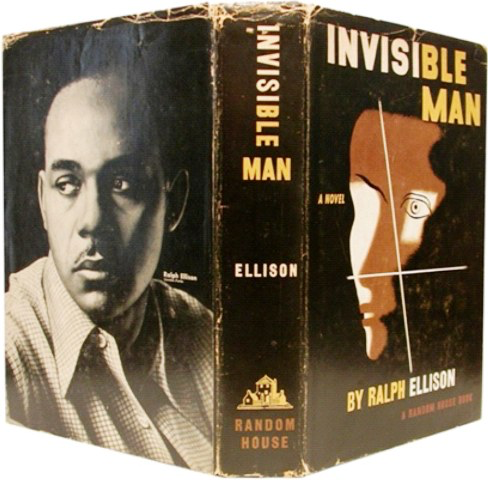
Invisibility has been on my mind since Michelle Obama mentioned the idea in her speech earlier this week at Tuskegee University. She spoke of the challenges of the African American experience this way:

“So there will be times, just like for those Airmen, when you feel like folks look right past you, or they see just a fraction of who you really are . . . the realization that no matter how far you rise in life, how hard you work to be a good person, a good parent, a good citizen — for some folks, it will never be enough.  And all of that is going to be a heavy burden to carry.  It can feel isolating.  It can make you feel like your life somehow doesn’t matter — that you’re like the invisible man that Tuskegee grad Ralph Ellison wrote about all those years ago.”

michelle-obama-tuskegee

Some of the kids at the middle school track meet worked really hard, gave it everything and still did not end up receiving honor for their work. They were invisible.

That made me consider my own experience with invisibility.

The truth is I don’t have a harrowing story to tell. I cannot say I have felt invisible on account of my race for example . . . well, that’s not quite true. Quick context: I grew up in Kenya, biracial with a Scottish mother and a Kenyan father. In Kenya, there is a defined racial category for mixed people. We are called “point-fives”; you cannot deny the mathematical accuracy of that term! Connotation? Not derogatory at all. If anything, the term is used positively. At least, that was how I experienced the word growing up. So, like many biracial African immigrants, I came to America, and became “black” for the first time (One of my favorite comedians, Trevor Noah, has a great bit on the same experience https://www.youtube.com/watch?v=QDXWUBIUi88!). The transition to “black” took some adjustment, but was ultimately fine, except in one area, casting.

I came to America to pursue a graduate degree in Theatre (Acting) and began to notice a trend. Directors would come up to me and say “I think you’d be great for this role” and I slowly began to notice that all the roles I’d be “great for” were black roles, that is explicitly written as black characters. Many of these roles were in fact good, but in those same plays I saw many other attractive roles that were not necessarily written as black characters. I was used to being selected for roles based on the depth and layers of the character, but now part of me was invisible. To some, I was black first, an actor second (quite the adjustment after being in an all Kenyan cast of Fiddler on the Roof many years ago. Yes, you read that right; 40 Kenyans playing Russian Jews without batting an eyelid!). That said, there have been many notable exceptions: I was cast as Jack in The Importance of Being Earnest and Pooh Bah in The Mikado by directors who recognized, but did not define, my acting by my color. I respected that.

But how did the limited view that some other directors took feel? It felt restrictive of course, but perhaps also put me in touch with certain parts of the minority experience in America in a more tangible way.

I must emphasize, though, that these challenges in no way compare to the very real, difficult and often daily experience of many in this country who are just not seen, either on account of their race, class, financial status, or position in all the races we run. But, I at least caught a glimpse of Ralph Ellison’s predicament in The Invisible Man:

“When they approach me they see only my surroundings, themselves or figments of their imagination, indeed, everything and anything except me.”

In medicine, there is an irony that it is possible to look at patients very closely, yet somehow manage not to see them. We pore over chest x-rays, dissect MRIs, scrutinize pathology slides, diligently save the finest image slices of their brains in a navigation program, yet somehow miss who they are.

So how then do we see the invisible?

There is a difference between the invisibility of an object and that of a person. A truly invisible object has some intrinsic quality that makes its presence unapparent. But an invisible person is not intrinsically invisible. That invisibility is conferred. That is what is so disheartening, that we as humans would ever choose to not see someone else. But perhaps, therein lies also the possibility for change. If we can confer invisibility, we can confer visibility. Each day can be an exercise in noticing the “middle runners.” Who is invisible to you? Who can you choose to see?

RalphEllison

Ex Machina

Ex Machina (2015)

They say things happen in threes.

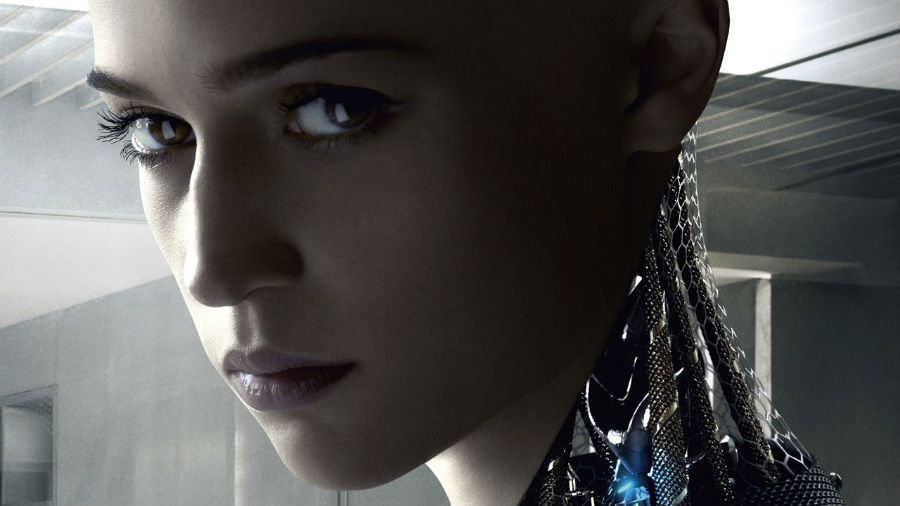
One, I watch a movie, Ex Machina, which poses provocative questions about how real an artificially intelligent human can be.

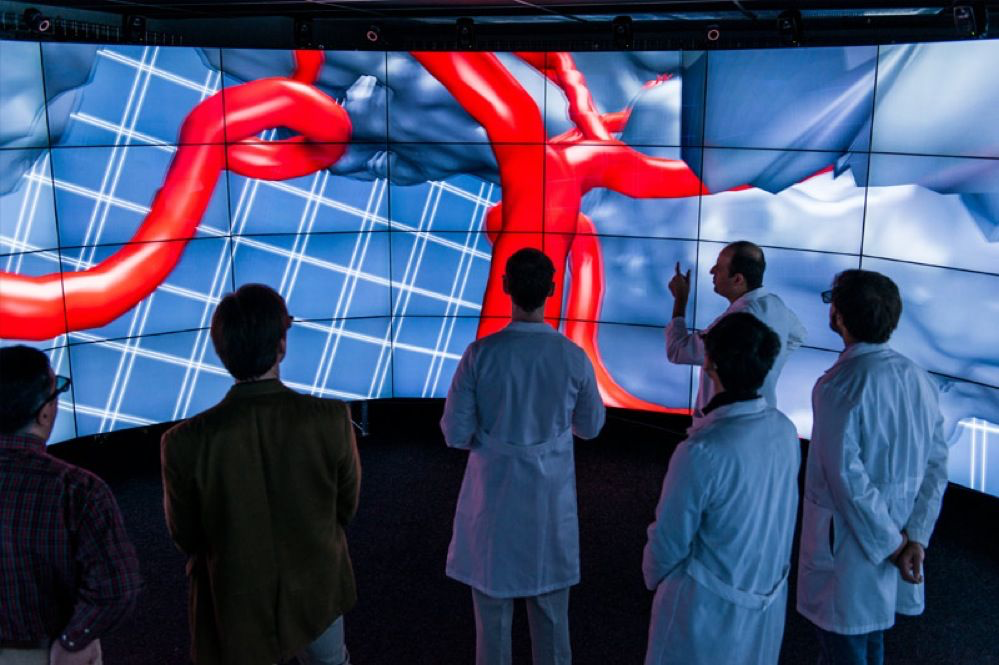
Two, I am in the middle of Neurosurgery research and come across some of the latest applications of Virtual Reality to navigate around the brain as if you were inside it.

Three, I get an email from my medical school about a new project in which students can practice difficult conversations with patients by speaking with virtual humans.

I like toys, but I do not consider myself a techie. Yet, I find myself fascinated by the concept of Virtual Reality. Why?

Then it hits me. I am trained in Theatre. Theatre is, by definition, Virtual Reality! You create a 3-D space with objects that look real but aren’t (as any actor who has had to eat cold mashed potatoes as if it were delicious ice-cream will tell you!). You surround yourself with people who are supposed to be real people  with whom you have real relationships. But of course, the whole thing is made up. The curtain will come down (the “console” will switch off). And just like that, Richard III becomes your cast mate and you go get a drink, no longer having to worry about being impaled on a sword (unless you gave a terrible performance . . .). And yet, your imaginary creation sent a room full of people home feeling new emotions and thinking new thoughts.

And so, the question becomes if the “Virtual Reality” of Theatre can provoke an emotional response, could the computerized Virtual Reality do the same, and perhaps even trigger the crucial emotion of empathy? That question must have occurred to journalist Nony Lapena when she teamed up with technologist Palmer Luckey to create a virtual world to portray the devastating reality of war-torn Syria http://techcrunch.com/2015/02/01/what-it-feels-like/

Her work was presented at this year’s Sundance Festival. So why does Ms. Lapena do it?

“Syria is so far away from most Americans. How do you attract a younger audience who might not pick up the newspaper to think about these important issues? That’s the point of all good journalism.”

Project Syria

All of which takes us back to the medical school project. Can interacting with virtual humans really help me prepare for such conversations with real patients? That depends, I imagine, on how “real” they are. And how do you know that? At what point does a computerized human cross that threshold? The movie Ex Machina proposed The Turing Test in which a human interacts with a machine that she is blinded to. If the responses of the machine convince the interrogator that she is speaking to a human, the machine has passed the test. In developing this test, Alan Turing raised an interesting point. The question, he said, is not can a machine think, but can it imitate human thought?

I have heard this line of reasoning used before in terms of empathy. Do we need to feel empathy to show it? Or is empathy a skill, a craft that should be learned like any other part of the physician’s arsenal?

The neurosurgeon uses Virtual Reality to master the architecture of the brain, through relentless repetition and adjustment. Can empathy be achieved in the same way? Is it trainable?

Virtual Reality Surgery

Virtual Reality Surgery

And, ultimately, when the headset is removed, the electronics shut down, and I am sitting in front of a patient with all our histories, biases and experiences present, but invisible and we begin to talk, into what reality have we just entered?

Have an existential weekend!

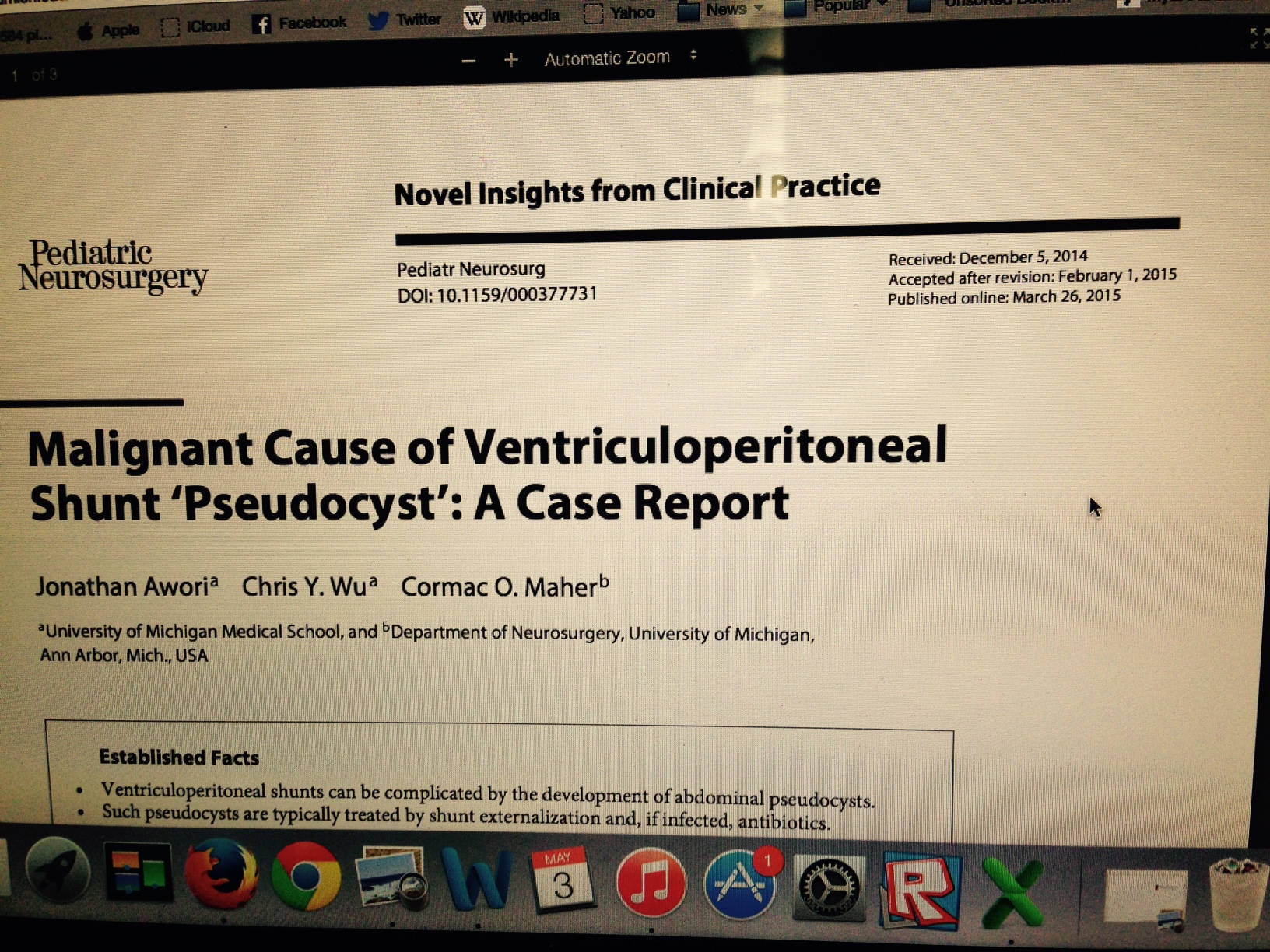
Research Graphic

Quite unexpectedly, I have found myself taking a detour in my medical school journey. I will spend the next 2 years on a research leave of absence from medical school in which I will pursue a Masters in Clinical Research through the School of Public Health at the University of Michigan. I will then apply to residency in September 2016 and graduate in May 2017 to start residency in July 2017.

This Masters program, though, does not begin till September this year so I get to spend the summer with my whole family in Elk Grove (Sacramento) California. Anne just joined us from LA after completing a grueling first year in her Masters of Architecture program. I’m extremely proud of her.

I plan to take advantage of this summer to dig into Neurosurgery research. I am currently working on two projects: the first project is based on my research at Kijabe Hospital earlier this year, focusing on hidden costs to families in obtaining pediatric neurosurgical care in Kenya. The second project looks at a rare but significant complication of the treatment for SubArachnoid Hemorrhage (bleeding in the brain). This complication is called PRES (Posterior Reversible Encephalopathy Syndrome) and occurs when fluid and proteins escape the blood vessels and thus cross the blood brain barrier. This is apparently more likely to occur when the blood pressure is high, which is exactly what we want to raise to treat vasospasm (narrowing) of vessels following sub-arachnoid hemorrhage. So this represents a classic medical dilemma: What do you do when the treatment for one condition precipitates another?

I am enjoying this research, but I must admit I was initially wary about engaging in such a dedicated period of study. I was concerned about long hours in front of a computer screen and limited human contact. Unlike some of my other endeavors like medical globe-trotting and teaching Improv, protracted research seemed decidedly unsexy! I miss the clinical scene, but research is striking unexpected chords within me. There is something captivating about seeking unearthed knowledge and adding something new to the literature. Research allows you to share knowledge that can potentially affect the care of millions of patients. Research appeals to the big picture, the “why” of medicine and that is compelling. You see, I don’t think doctors should be let off the hook of being challenged to think big. Yes, medicine is noble and takes a lot of work and that should be acknowledged. But becoming a doctor is only the beginning. Are we thinking big enough? Empathetically enough? Or is it simply easier to hide self-interest under a white coat?

This surprising level of engagement in research led me to wonder what other things I underplay that may, in fact, be meaningful. We decide early on that certain pursuits are not for us and justify that saying “That’s not me” or “That doesn’t fit my personality” but this rationale presumes that we have a complete and accurate perception of who we are. It also ignores the fascinating contradictions that make us human. What happens, instead, if you only decide who you are after you pursue certain paths instead of pre-judging the path based on a potentially imperfect perception of yourself?

You might just surprise yourself . . .